An environmental library of Japanese picture books for children published after 1945. Books whose heroes are anthropomorphized landscapes, plants, natural objects, insects, and other more-than-human actors aim to explore how ehon convey a relationship to nature and the living world. With the hope that when a mountain has a face, it is not so easy to start digging into it.
In an oak forest, sometimes many small trees sprout, and in some years there are desperately few. Why is this? The oaks deliberate on how to coordinate with the populations of animals that eat acorns over winter, and how to establish harmony in the forest.
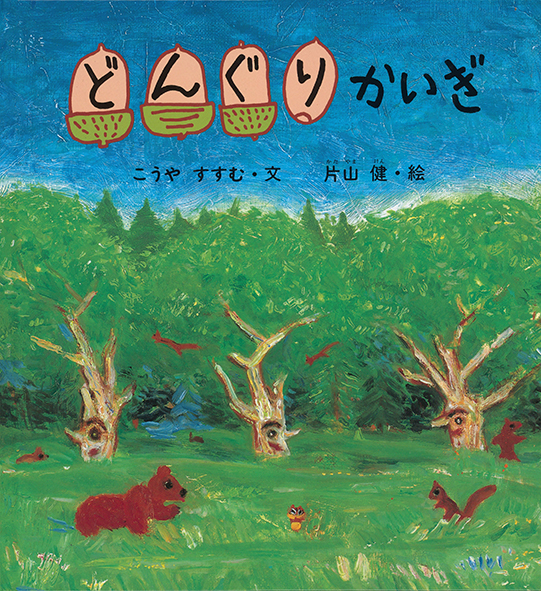
The Acorn Conference Text: Susumu Koya, Illustrations: Yoshiko Saito
In an oak forest, sometimes many small trees sprout, and in some years there are desperately few. Why is this? The oaks deliberate on how to coordinate with the populations of animals that eat acorns over winter, and how to establish harmony in the forest.
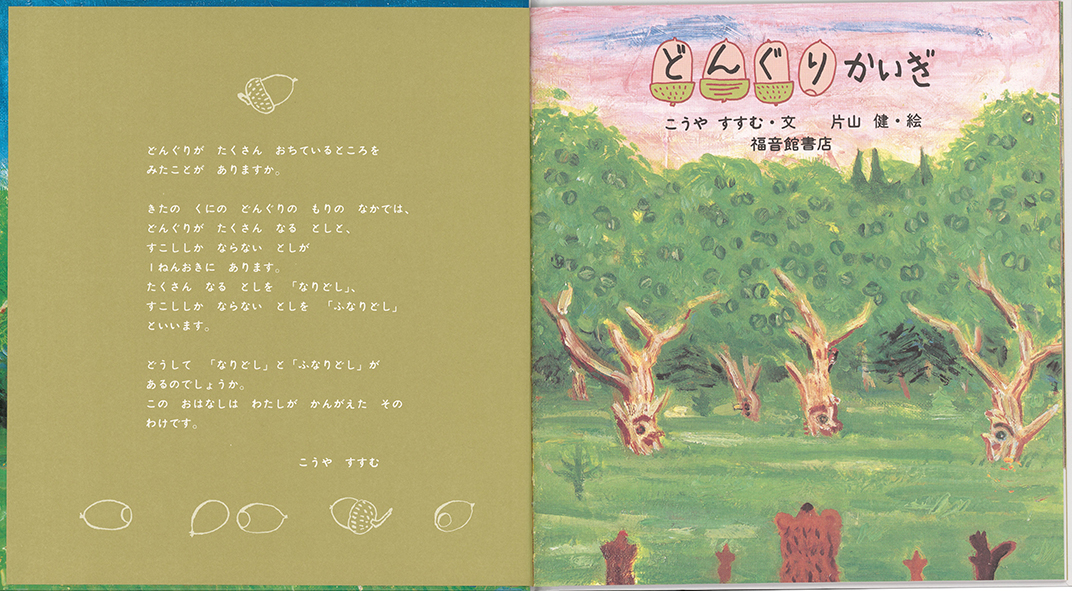
Have you ever seen a place where there are lots of acorns on the ground? In an oak forest in a northern land, there are years when many acorns grow, and years when only a few grow — and these years alternate. A year when there are many is called a "year of plenty," and a year when there are few is called a "year of poor harvest." Why are there "years of plenty" and "years of poor harvest"? This story is my explanation of that question.
The Acorn Conference Text: Susumu Koya Illustrations: Ken Katayama Publisher: Fukuinkan Shoten
In an oak forest, sometimes many small trees sprout, and in some years there are desperately few. Why is this? The oaks deliberate on how to coordinate with the populations of animals that eat acorns over winter, and how to establish harmony in the forest.
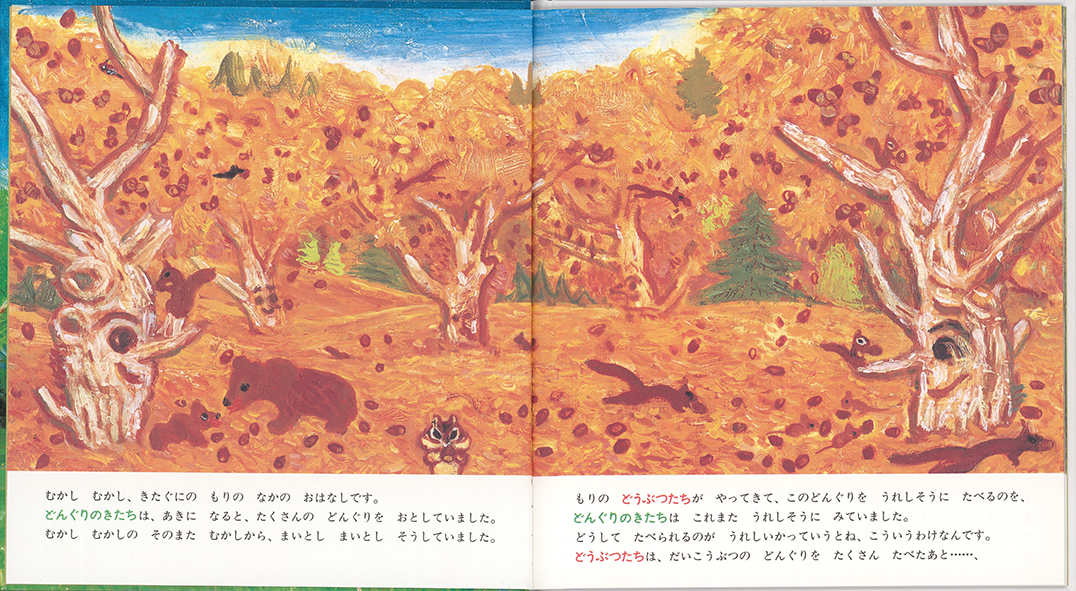
Once upon a time, this story took place in a forest in a northern land. When autumn came, the oak trees dropped plenty of acorns. And so they had done every year, since time immemorial. The forest animals would come and eat the acorns with delight, and the oak trees would watch with delight too. Why were they pleased to see their acorns being eaten? There is a reason for that. For when the animals eat plenty of their beloved acorns...
In an oak forest, sometimes many small trees sprout, and in some years there are desperately few. Why is this? The oaks deliberate on how to coordinate with the populations of animals that eat acorns over winter, and how to establish harmony in the forest.
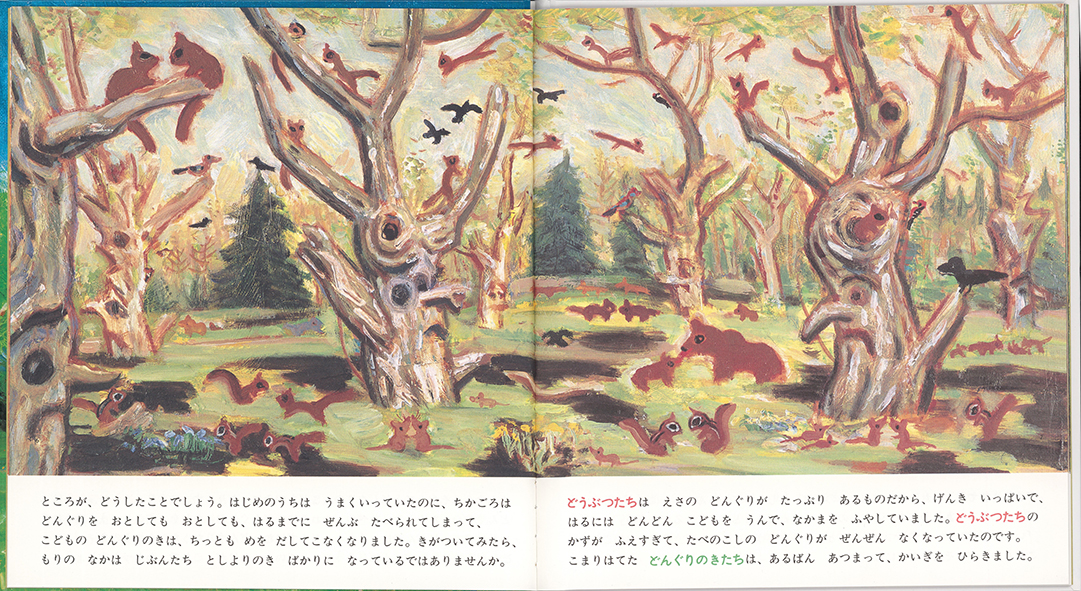
But what happened? At first everything worked well, but lately, even though acorns kept falling and falling, by spring they had all been eaten, and young oak trees had stopped sprouting altogether. When the oaks took notice, they found that the forest was full of nothing but themselves — old trees. The animals had plenty of acorns, were full of energy, and in spring kept giving birth to more and more young, multiplying all the while. Their numbers had grown so great that not a single acorn was left uneaten. One evening, the desperate oaks gathered together and called a meeting.
In an oak forest, sometimes many small trees sprout, and in some years there are desperately few. Why is this? The oaks deliberate on how to coordinate with the populations of animals that eat acorns over winter, and how to establish harmony in the forest.
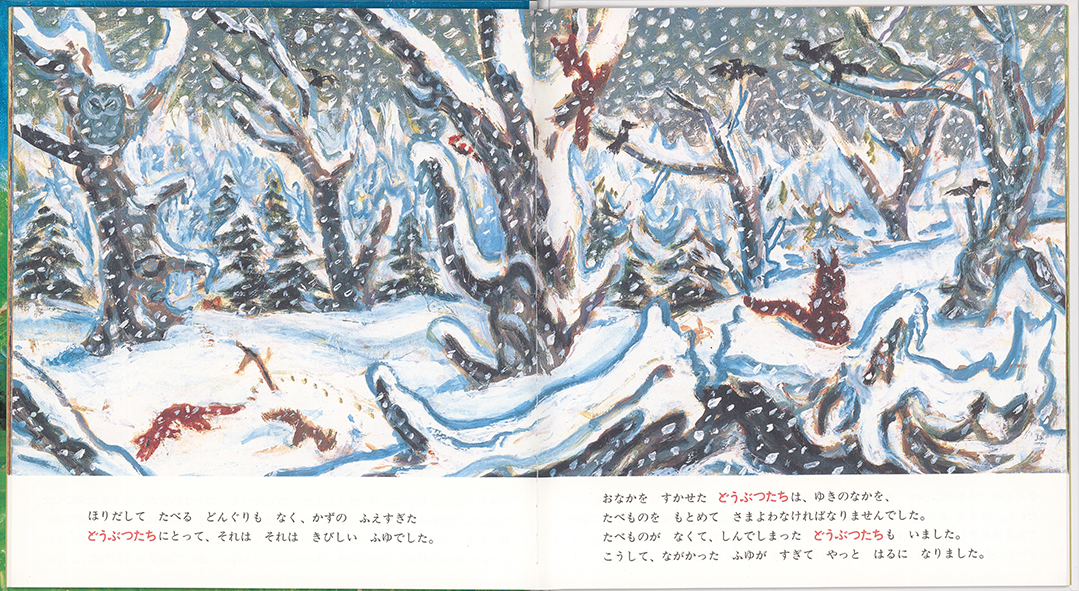
There were no more acorns to dig up and eat, and for the overpopulated animals it was a truly harsh winter. The hungry animals had to wander through the snow in search of food. Some of them perished without finding any. And so the long winter passed, and spring finally came.
In an oak forest, sometimes many small trees sprout, and in some years there are desperately few. Why is this? The oaks deliberate on how to coordinate with the populations of animals that eat acorns over winter, and how to establish harmony in the forest.
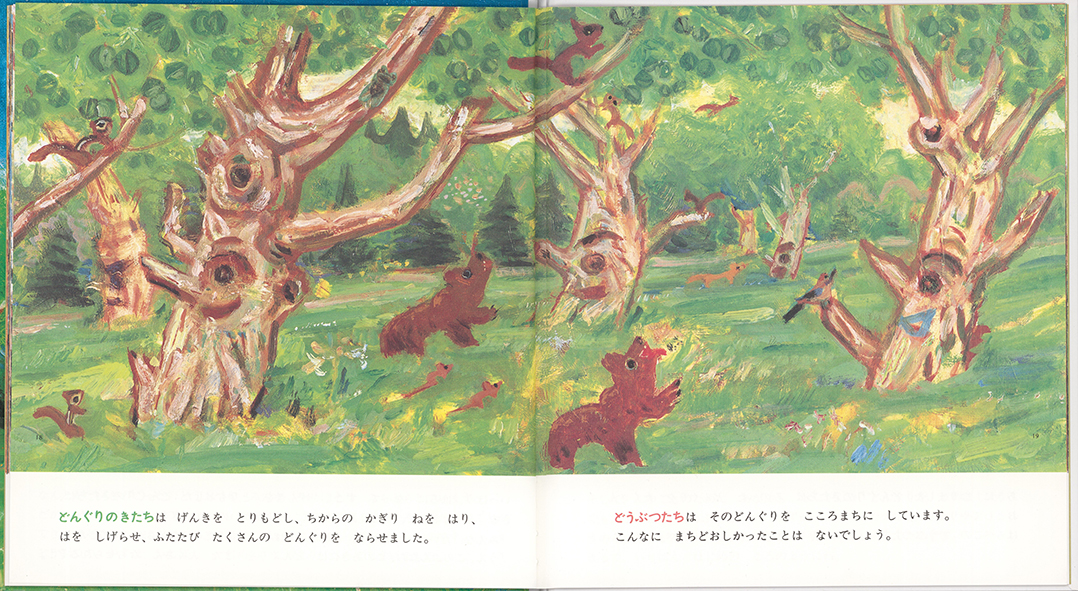
The oaks regained their strength, spread their roots as wide as they could, unfurled their leaves and once again bore plenty of acorns. The animals could hardly wait for those acorns. Perhaps they had never looked forward to anything as much as this.
In an oak forest, sometimes many small trees sprout, and in some years there are desperately few. Why is this? The oaks deliberate on how to coordinate with the populations of animals that eat acorns over winter, and how to establish harmony in the forest.
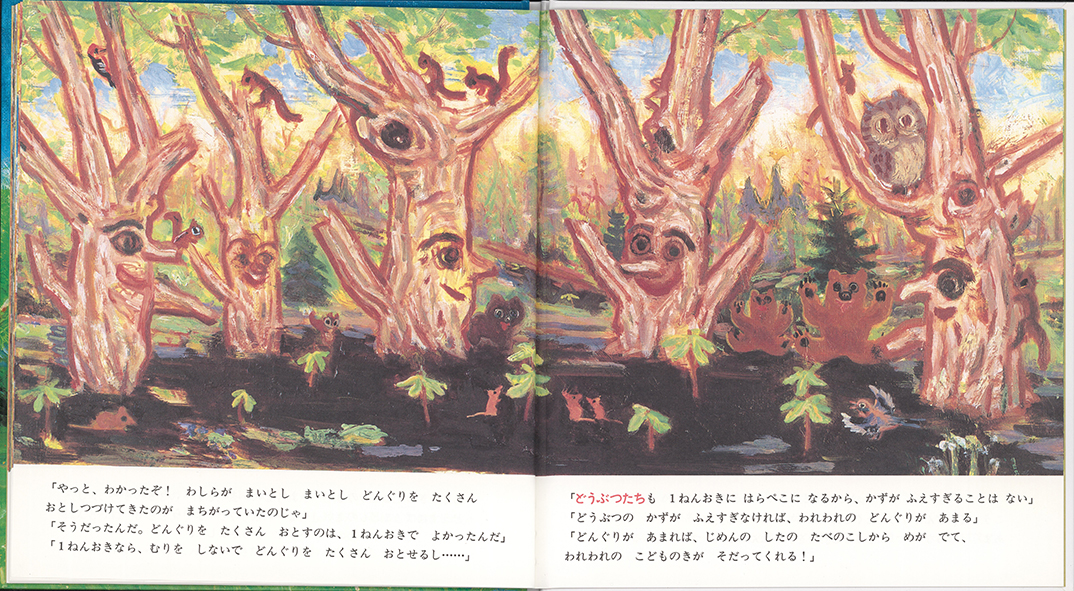
"We've finally figured it out! Dropping plenty of acorns every single year was our mistake." "That's right. It would be enough to drop acorns abundantly just once every two years." "If it's once every two years, we won't exhaust ourselves and we'll be able to drop plenty of acorns..." "And the animals will go hungry once every two years too, so their numbers won't grow out of control." "If their numbers don't grow out of control, our acorns will remain." "And if some acorns are left over, new shoots will sprout from the fallen, damp remains and grow into our children — new trees!"
In an oak forest, sometimes many small trees sprout, and in some years there are desperately few. Why is this? The oaks deliberate on how to coordinate with the populations of animals that eat acorns over winter, and how to establish harmony in the forest.
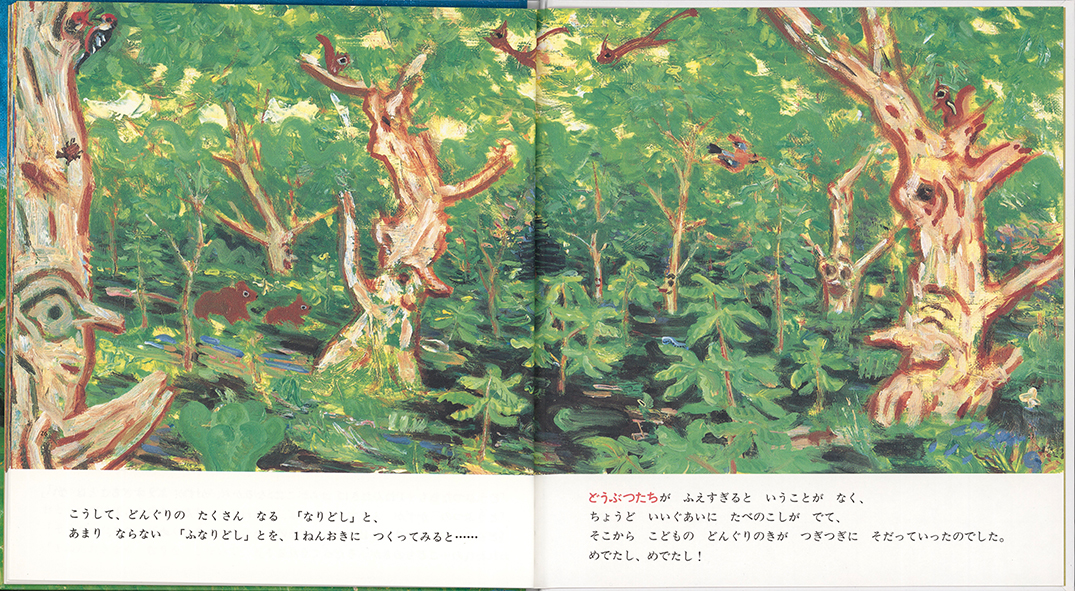
And so they tried alternating a year of many acorns ("a year of plenty") with a year of few ("a year of scarcity"), every other year… The animals no longer multiplied out of control, there was always just enough left uneaten, and from that, one by one, young oak trees grew. And all was well.